-

-
Spectrophotometers are used to measure the concentration of a known substance in a solution. They do this by passing a light through the substance and measuring light intensity as a function of wavelength. Either single beam or double beam spectrophotometers can be purchased. In a single beam spectrophotometer, a reference standard is used to measure light intensity before and after the sample is loaded. For double beam spectrophotometers the beam is split with one beam passing through the standard and the other through the sample to compare intensities.
-
-
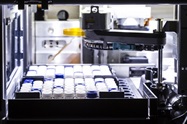
Automated liquid handling robots (a class of devices that can include automated pipetting systems as well as microplate washers) dispense and sample liquids in tubes or wells and are often integrated as automated injection modules as the front end of liquid chromatographic systems. These critical labor saving devices offer precision sample preparation for high throughput screening/sequencing (HTC), liquid or powder weighing, sample preparation, and bio-assays of many kinds. The automated pipetting systems handle volumes ranging from .5 ul to 5 L.
-
-
An infrared spectrophotometer is an analytical instrument used to identify materials including organic polymers. Infrared spectrophotometers record the relative amount of energy as a function of the wavelength/frequency of the infrared radiation when it passes through a sample. Therefore, chemical structures of different samples will reflect differences in the IR absorption spectrum allowing for identification of a sample.
-
-
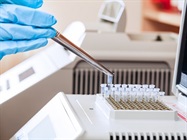
Polymerase chain reaction (PCR) is a workhorse technique of molecular biology laboratories in clinical and basic science. DNA thermal cyclers and gradient PCR units are essential in these laboratories. Selecting a good DNA thermal cycler is important. During PCR analysis, the well or tube capacity will determine the number of samples that can run at one time, including different combinations of temperature gradients (if available), MgCl2 concentrations, and primer levels within a single run. Temperature ranges, temperature ramp speeds, and programmability all influence an instrument’s versatility.
-

-
A lab water system (or laboratory water purification system) provides a consistent, pure, and adjustable source of water essential for many laboratory experiments. There are a variety of laboratory water systems, including deionized water systems, high flow lab water systems, reagent grade water systems, reverse osmosis water purification systems, and ultrapure water systems.
-

-
X-ray fluorescence spectrometers use high-energy X-rays (or gamma rays) to excite fluorescent radiation from a sample for quantitative chemical or elemental analysis and have many industrial and research applications. Elements with an excitation energy less than the x-ray beam fluoresce and can be counted by a wavelength-dispersive or energy-dispersive spectrometer. The advantages of X-ray fluorescence spectrometers are that there is no need for sample prep (the material can simply be placed in the beam), and that it is a non-destructive analysis technique.
-

-
Ultra low temperature freezers (ULT freezers) typically have a temperature range of -45C to -86C and are used for the storage of drugs, enzymes, chemicals, viruses, bacteria, cell preparations, and tissue samples, among others. There are several designs for ultra low temperature freezers with varying sizes depending on how much storage is needed and the available footprint space. For frequent use, an upright ULT freezer allows easy access, individual adjustable interior compartments, and fast cooling after opening.
-

-
Particle analyzers are used to determine the size and distribution of particles making up a material. Particle size analyzers are used in numerous fields for research and development, manufacturing and for quality control and product testing. Different technologies enable analysis across a wide range of sizes, of particles in powder, liquid, aerosol or other forms, and of materials ranging in diversity from soil, paint and cosmetics to nasal spray and proteins.
-
-
High-performance liquid chromatography (HPLC) (also called high-pressure liquid chromatography) is a solution-phase technique for fractionation of complex samples. Unlike standard column chromatography, HPLC is an active process in which materials are pumped at high pressure through the separation column, which contains the so-called “stationary phase” of the separation in the form of densely packed, often chemically functionalized beads.
-

-
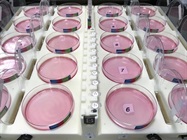
A cell culture incubator is designed to maintain a constant temperature and high humidity for the growth of tissue culture cells under a CO2 atmosphere. Typical temperature settings range from 4C to 50C, and CO2 concentrations run from 0.3 to 19.9%. Non-corrosive stainless steel interiors are standard, but some newer models feature antimicrobial copper surfaces to prevent contamination. Auto decontamination using heat or UV light is another new and attractive feature available in CO2 incubators.